Restaurant guide
AI wine pairing for restaurants
AI wine pairing in a restaurant should make a difficult menu decision easier. It gives a guest a short, guided path from their meal and preferences to a relevant bottle or pour from the restaurant experience—while keeping the server, beverage director, and sommelier central to hospitality.
For restaurant owners, operators, general managers, beverage directors, wine directors, sommeliers, and F&B teams.
What does AI wine pairing mean in a restaurant?
In this setting, AI wine pairing is a decision-support experience. The guest supplies useful context—such as the dish, preferred style, or desired direction—and the restaurant experience returns a recommendation from the choices configured for that venue.
A useful system does not present an endless encyclopedia of wine. It narrows the decision to a clear, explainable recommendation the guest can ask for at the table.
Why do guests hesitate before ordering wine?
Wine lists can ask a guest to compare grapes, regions, producers, vintages, prices, and unfamiliar descriptions at once. A guest may want wine with dinner but still default to a familiar glass—or skip the decision—when the next step is unclear.
The practical opportunity is not to replace conversation. It is to give the guest enough confidence to begin one: a named recommendation, a pairing reason, and a simple way to ask the server for it.
How does a QR-based pairing flow work at the table?
- The guest scans a QR code from a menu, table piece, check presenter, or sign.
- The mobile page opens in the browser; no guest app or account is required for the core restaurant demo flow.
- The guest starts with food or a beverage category and answers a small number of preference questions.
- The experience returns a recommendation from the restaurant’s configured beverage selection.
- The guest asks the server for the recommendation and can share a branded dining card afterward.
What restaurant information should shape recommendations?
Recommendations are most useful when they reflect the venue rather than a generic global list. The configured food menu, beverage list, styles, descriptions, and availability rules should define what the guest can actually request.
Restaurants should review recommendation copy just as they review menu copy: it should be specific enough to help, understandable without specialist knowledge, and consistent with what the team can serve.
How do staff and sommeliers stay central?
The digital flow handles the first moment of uncertainty. Staff still provide context, confirm availability, answer questions, take the order, and deliver hospitality. A sommelier or beverage director remains the authority on the restaurant’s list and can shape how the experience represents it.
That division is important: technology can make a recommendation available at the moment of hesitation, while people turn that recommendation into a confident guest experience.
Where does branded sharing fit?
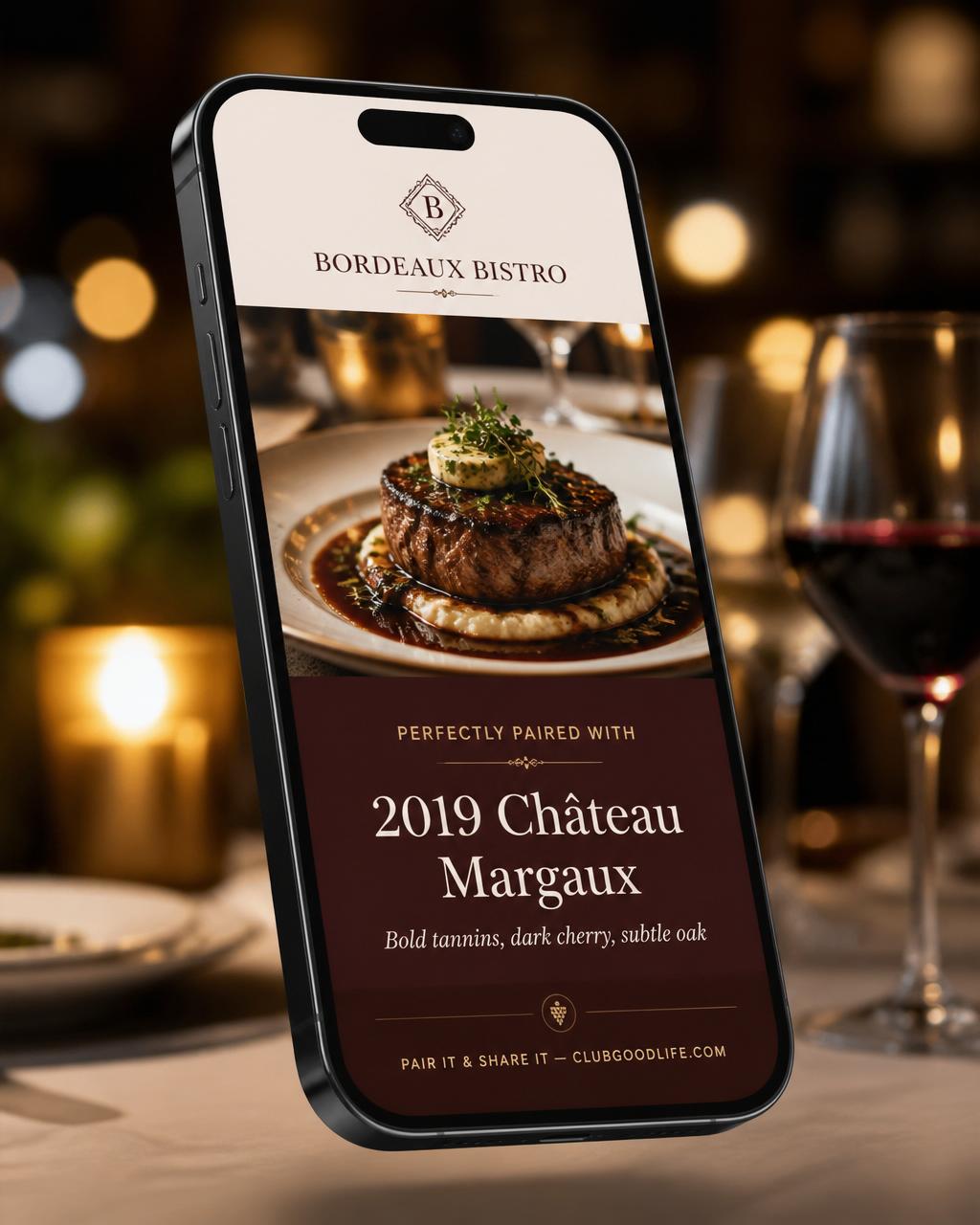
Sharing comes after the useful part. Pair It & Share It can turn the recommendation or a dinner photo into a restaurant-branded card that a guest may share by social, text, or email. The card keeps the venue connected to the dining moment without making sharing a requirement.
What should operators check before choosing a tool?
- Does it recommend from the restaurant experience rather than an unrelated catalog?
- Can a guest use it quickly in a mobile browser?
- Can the beverage team review the categories and recommendation language?
- Does it support the drinks the venue actually offers?
- Is the handoff from recommendation to server clear?
- Can branded sharing link the guest moment back to the restaurant?